
Another priority in the first 100 days could be the launch of an e-platform -- Trade Connect -- to help exporters connect with stakeholders of international trade.

Maharashtra received the lion's share of the foreign direct investment inflows into India during April-August this fiscal, according to industry ministry's latest data.

Modi is courting Japanese investment in an ambitious industrial "corridor" to run between Delhi and Mumbai.
Foreign direct investment to India is zooming. FDI inflows to the country during 2006-07 surged to a record $16 billion, according to the annual supplement of the Foreign Trade Policy unveiled on Thursday.
Wiser from the Hutch-Vodafone experience, the government is now thinking of clubbing both direct and indirect overseas investment to determine the extent of foreign direct investment in a company.
Foreign institutional investors are likely to be debarred from taking part in initial public offerings of stock exchanges, while foreign direct investment may be permitted even in pre-IPO stage.

In 2008, the textiles industry had attracted FDI worth Rs 869.6 crore (Rs 8.69 billion).
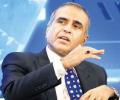
Telecom operator Bharti Airtel Chairman Sunil Mittal on Wednesday said the telecom sector reforms approved by the Cabinet will ensure that the industry is able to invest fearlessly, and the company will respond to Prime Minister Narendra Modi's call to invest and accelerate the country's growth. Among a series of breathers for the stressed telecom sector, the Cabinet has approved the inclusion of revenues earned only from telecom services in the adjusted gross revenue (AGR), and the removal of penalty on dues to be paid to the government prospectively. Mittal congratulated and thanked the government for undertaking these seminal reforms to lift an industry that is at the core of his Digital India vision.

Australia on Wednesday unveiled an ambitious roadmap to deepen and diversify its trade and investment ties with India. The roadmap identified four "superhighways of growth" -- clean energy, education and skills, agribusiness, and tourism. Broadly, it sets out a pathway to focus ongoing efforts, including to boost two-way investment, and work with Indian-Australian communities and businesses.

Maharashtra topped the chart in terms of attractiveness at sub-national level in a weighted index calculated on the basis of individual ranking provided by participants of Ficci FDI Survey 2006.

About 281 cases have been taken up for investigation by the Directorate of Enforcement regarding suspected violations of foreign direct investment (FDI) norms all over the country during April 2019 to March this year, Parliament was informed on Wednesday. Necessary action as per provisions of Foreign Exchange Management Act, 1999 (FEMA) has been taken, which includes issuance of show cause notices, adjudication and imposition of penalty, Minister of State for Commerce and Industry Som Parkash said in a written reply to the Lok Sabha. In these cases, following the due process of adjudication, penalties of more than Rs 2,600 crore have been imposed under the FEMA, he said, adding the Reserve Bank of India (RBI) has done compounding of contraventions of FDI related FEMA provisions in total of 1,421 cases across the country during the last three years.

The 10-nation regional block of Association of South East Asian Nation (ASEAN), and not China and India, is the leading destination of America's foreign direct investment, a top US trade official said Monday.

The income tax department has notified rules for valuation of equity and compulsorily convertible preferable shares issued by startups to resident and non-resident investors. As per the changes in Rule 11UA of I-T rules, which comes into effect from September 25, the Central Board of Direct Taxes (CBDT) provides that the valuation of compulsorily convertible preference shares (CCPS) can also be based on the fair market value of unquoted equity shares. The amended rules also retain the five new valuation methods proposed in the draft rules for consideration received from the non-residents viz., (i) Comparable Company Multiple Method, (ii) Probability Weighted Expected Return Method, (iii) Option Pricing Method, (iv) Milestone Analysis Method, and (v) Replacement Cost Method.

Former Indian Prime Minister Manmohan Singh passed away on Thursday night at the age of 92. He was brought to the emergency department of AIIMS Delhi in critical condition after "sudden loss of consciousness."

The investments were a mix of issuance of guarantees ($2.53 billion), loan ($257.60 million) and of equity ($232.59 million).

Capital dumping is being used by foreign e-commerce firms to subsidise and engage in predatory pricing, oil-to-telecom conglomerate Reliance Industries (RIL) has told the Associated Chambers of Commerce and Industry of India (Assocham) in an internal document. The document alleges that this is leading to massive unemployment and financial distress among small merchants and kirana stores. It consists of various recommendations and proposed changes that deal with Press Note 2 of 2018 (PN 2), which RIL wanted Assocham to present to the government, according to sources.
The much-awaited guidelines on foreign direct investment in telecom are expected to be notified this month with companies likely to be given a maximum of four months

The bank would take a call on the subject once the laws are amended to hike foreign direct investment in insurance sector from 26 per cent to 49 per cent, ICICI Bank CEO and managing director Chanda Kochhar told PTI. This would help create value for the stake holders, she clarified while pointing out that ICICI Bank's share price had increased three times in the last six months to about Rs 750 a share.

The foreign direct investment in the country declined by 25 per cent to $2.04 billion in January compared to the same month last year, snapping a trend of positive growth in the previous three consecutive months.

To boost Make in India in defence production, Finance Minister Nirmala Sitharaman on Saturday said foreign direct investment limit in defence manufacturing will be hiked to 74 per cent from 49 per cent while some weapons and platforms will be banned for imports.

The Trump administration has revoked Harvard University's eligibility to enrol foreign students, raising concerns over the legal status of thousands of students, including nearly 800 from India, currently enrolled at the varsity.

'Traders must adopt digital payments as soon as possible within a set timeframe, as the nation is moving rapidly towards digitisation.' 'Ignoring digital systems is not an option for strengthening trade.'
India is set to attract foreign direct investment of $40 billion in fiscal 2008-09 with overseas investors betting big on the manufacturing sector in the world's second fastest growing economy.

'Most tax notices arise not from wrongdoing, but from unintentional mismatch or ignorance.'

'We continue to view India as a standout within EM.'

Among Sensex firms, Eternal, Tata Motors, State Bank of India, Adani Ports, NTPC, IndusInd Bank, Bajaj Finance, Asian Paints, Axis Bank and Sun Pharma were the major losers. Bharti Airtel, Tata Steel, Mahindra & Mahindra, Hindustan Unilever, Nestle and Maruti were among the gainers.

The government had first mentioned raising foreign direct investment ceiling in insurance sector to 49 per cent from the current 26 per cent in the 2004 Union Budget and introduced a Bill to do so over a year ago.

The inflows were $1.08 billion foreign direct investment in the same month last year.

India's current account deficit declined sharply to 1 per cent of the GDP or $8.3 billion in the second quarter of this financial year, mainly due to lower merchandise trade deficit and growth in services exports, according to a RBI data released on Tuesday. The current account deficit (CAD), which represents the difference between the total amount of money sent abroad and money received from overseas across the economy, was 3.8 per cent of GDP or $30.9 billion in the July-September quarter in 2022-23. CAD was $9.2 billion or 1.1 per cent of GDP in the first quarter (April-June) of the current financial year 2023-24.

Investors should avoid making drastic changes to their asset allocation during a market correction.
The inflow in December 2008 is lower compared to $1.55 billion FDI the country received in the same month in the previous fiscal. The country has set a target of $35 billion for FDI in the current fiscal.

Foreign Direct Investment flows to India in 2021 were 26 per cent lower, mainly because large M&A deals recorded in 2020 were not repeated, the UN trade body has said.

'Even if India is attractive, FPIs currently lack the funds to invest, as money is being redirected to the US.'

Costs on real estate construction are seeing stability.
India's national commodity exchanges will have to now wait longer for the government nod for foreign direct investment.

In June this year the figure was at $2.58 billion. However, the total inflows during the April-July period contracted by about 15 per cent to $10.53 billion over the same quarter of 2008-09, because of accruals in the opening months of the fiscal. In the first four months of 2008-09 it was at $12.32 billion.
The government will draw up FDI guidelines for minor investors and set up an exclusive park for overseas units.

The Union Cabinet has approved amendments to the General Insurance Business (Nationalisation) Act, paving the way for privatisation of government-owned insurers. The amendments, approved by Cabinet, will remove the clause for the Centre to hold at least 51 per cent in public sector insurance companies at any given time. It will also have an enabling provision for the transfer of management control from the government to the potential buyer of the public sector insurance company. The finance ministry will move amendments to the insurance Act in the ongoing Parliament session.
